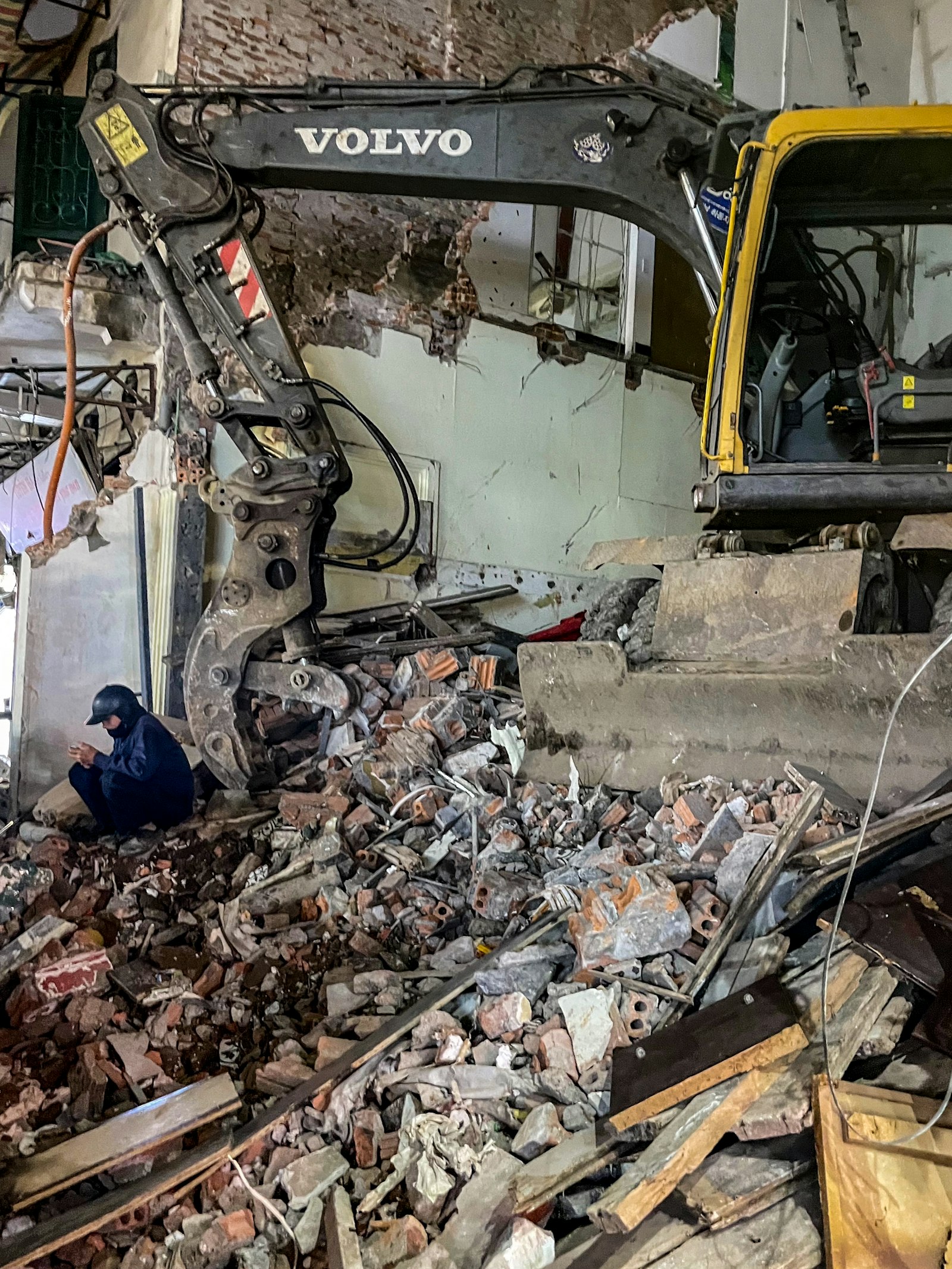
Renovation and construction sites generate rubble fast, and it's not always obvious what a standard rubble removal service can take away versus what needs special handling. Here's the practical breakdown.
What building rubble removal typically covers
- Broken bricks, blocks and concrete
- Sand, soil and rubble from excavation
- Tiles, plaster and general demolition debris
- Timber offcuts and general building waste
- Old fittings, pipes and small metal offcuts
What usually needs separate handling
- Asbestos-containing materials (roofing sheets, old ceiling boards) — these require specialist, licensed removal, not standard rubble collection.
- Paint, solvents and other chemical waste — hazardous waste has its own disposal requirements.
- Large volumes of scrap metal — often better handled as a dedicated scrap collection so it can be weighed and recycled properly, and documented with a Certificate of Destruction if needed.
If you're not sure whether something on site falls into a special category — particularly with older buildings where asbestos sheeting was common — flag it when you book, and we'll advise on the right approach rather than just loading it onto the truck.
Keeping a site moving
On active building sites, rubble that isn't cleared regularly slows everyone down and creates safety hazards. Booking rubble removal at set intervals through a project — rather than waiting until the end — keeps the site safer and easier to work on, and means smaller, more manageable loads each time rather than one enormous clear-out.